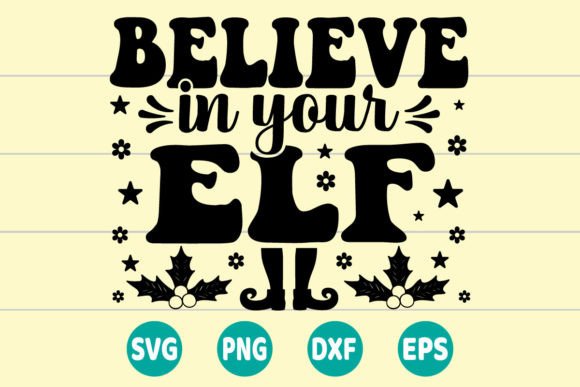
Believe in Your ELF SVG: A Hands-On Review for Embroidery Pros
When you work with machine embroidery designs day in and day out, you start spotting the winners before they even hit the hoop. I have been stitching out digital embroidery files for custom apparel, handmade products, and small shop merchandise long enough to know that not every SVG translates well into thread. Some designs look charming on screen but lose their personality under the needle. Others stitch out like a dream and make your customers reach for their wallets. So when I got my hands on Believe in Your ELF SVG, I wanted to give it a real workout before I recommended it to anyone running a craft business or selling finished products on Etsy.
Let me walk you through what I found after testing this design in several real embroidery projects. If you are an Etsy seller, a boutique owner, a hobbyist stitching holiday gifts, or someone who sells custom apparel at craft fairs, this review is for you.
First Impressions: Mood, Shape, and Visual Personality
Opening Believe in Your ELF SVG for the first time, I was struck by how balanced the composition feels. The theme is playful without being childish, festive without being loud, and detailed without feeling cluttered. The elf motif carries a whimsical energy that lands well on everything from kids' sweatshirts to kitchen towels and tote bags. The layout gives you enough room to pair it with names, monograms, or small decorative accents if you want to personalize it for a custom gift.
The visual personality sits right in that sweet spot between cute and tasteful. That matters when you are stitching for a client who wants something that feels handmade and special, not mass-produced. I could see this design becoming a reliable go-to for holiday embroidery projects, especially if you run a small shop that offers personalized gifts or boutique branding.
Real Case Scenario: A Custom Embroidered Tote Bag for Holiday Markets
I decided to test Believe in Your ELF SVG on a medium-weight cotton tote bag. Tote bags are a staple for many embroidery businesses because they are affordable to produce, easy to ship, and popular as personalized gifts. I wanted to see how the design would behave on a fabric that has a bit of texture but not much stretch.
The design stitched out cleanly. The fill stitches laid down smoothly, and the satin stitch elements held their shape without pulling or distorting the fabric. I used a medium-weight cutaway stabilizer with a light tearaway layer on top, and the results were crisp. The thread colors popped nicely against the natural cotton background. I tested a dark green thread combination first, then a red and gold palette for a more festive look. Both versions looked professional and finished.
I brought the tote to a small holiday market, and the response was immediate. Several shoppers asked if the design was available on sweatshirts or as an embroidered patch. That told me the visual appeal translates well into a finished product that people actually want to buy. If you sell handmade products at craft fairs or run an Etsy shop, this design gives you a strong option for holiday inventory.
How the Design Performs Across Different Products
After the tote bag test, I moved on to other surfaces. Here is what I learned about using Believe in Your ELF SVG on various items that embroidery designers and small shop owners typically work with.
Sweatshirts and Custom Apparel
This is where the design really shines. Sweatshirt fabric has a soft surface that absorbs stitching well, and the elf motif sits beautifully on the chest or centered on the back. I tested it on a mid-weight fleece sweatshirt and noticed that the stitch density was appropriate for the fabric type. The design did not pucker or cause the garment to distort. If you stitch custom apparel for clients or build your own clothing line, this embroidery file will serve you well.
Baby Embroidery and Children's Clothing
Because the design has a friendly, playful look, it works naturally on baby onesies, toddler shirts, and children's sweaters. The detail level is not so fine that it gets lost on small garments, which is a concern I often have with intricate SVGs. That said, I would recommend using a smaller hoop size for baby items and checking stitch density on lightweight fabrics. A soft cutaway stabilizer is your friend here.
Embroidered Patches
I stitched out a patch version of Believe in Your ELF SVG using a tight satin stitch border and a twill fabric base. The patch came out clean, with sharp edges and good coverage. If you sell patches as part of your craft business or offer them as add-ons to your embroidery projects, this design is a solid candidate. The motif reads well at patch scale, and the color blocking makes it easy to layer.
Holiday Gifts: Pillow Covers, Towels, and Aprons
Pillow covers and tea towels are popular personalized gifts, especially during the holiday season. I tested the design on a linen-blend tea towel and a cotton pillow cover. Both stitched out without issues. The design held up well after a gentle wash cycle, which is important if your customers plan to use these items frequently. Aprons are another natural fit. The elf motif adds a festive touch to kitchen apparel without looking overly themed.
Where to Use This Design Carefully
No design is perfect for every surface, and Believe in Your ELF SVG has a few limitations worth noting. If you are an embroidery designer who values clean results on every project, pay attention to these points.
- Small hoop sizes: If you try to run this design in a very small hoop, you might lose some of the finer details. I recommend testing it in your standard hoop size first and scaling down only if the stitch density allows it. Check the design at the size you plan to use before committing.
- Thin or stretchy fabric: Lightweight knits and stretchy fabrics require careful stabilization. The fill stitch areas in this design have moderate density, so without proper stabilizer, you could see tunneling or distortion. Use a sticky stabilizer or a heavyweight cutaway for stretchy garments.
- Dark fabrics: The design uses a range of colors that can get lost on very dark backgrounds. If you are stitching on black or navy, choose thread colors that stand out. A light underlay can help with coverage, but I always recommend a quick test stitch on a scrap of the same fabric.
- Curved surfaces like caps: Caps are tricky for any design, and this one has enough detail that it requires careful hooping and positioning. I would not recommend it for a curved cap surface unless you have experience with cap frames and can stabilize the area well. A flat-front cap style might work, but test it first.
- Dense stitch areas: Some sections of the design accumulate more stitches than others. If you notice any unbalanced density, consider adjusting your underlay or using a lighter stabilizer to keep the fabric from puckering.
Visual Appeal, Stitching Clarity, and Product Value
When I evaluate a digital embroidery file for real project use, I look at three things: how it looks on the screen, how it behaves under the needle, and how the finished product feels in hand. Believe in Your ELF SVG scores well on all three. The stitching clarity is strong, even at moderate sizes. The design reads as cohesive and deliberate, which adds a layer of professionalism to your handmade products.
From a business perspective, this design increases the perceived value of anything you stitch it onto. A plain tote bag becomes a gift-worthy item. A basic sweatshirt turns into a boutique product. That matters when you are pricing your finished items for craft fairs or listing them on Etsy. Customers are willing to pay more for embroidery that looks thoughtful and well-executed.
The design also supports brand consistency if you sell a line of products. You could stitch it on a tote, a sweatshirt, a towel, and a patch, and the whole set would feel cohesive. That kind of versatility is rare in a single SVG file, and it makes Believe in Your ELF SVG a smart addition to your design assets.
Practical Embroidery Designer Notes Before You Stitch
Before you load this design into your machine and start producing finished products, here are the notes I always share with other embroidery designers, small business owners, and crafters.
- Test on scrap fabric first. I cannot stress this enough. Even the best embroidery file can behave differently depending on your machine, needle, thread, and fabric. Stitch out a sample on fabric similar to your final product before you commit to a production run.
- Check thread color contrast. View the design in black and white mockup format to see if the elements separate clearly. If the contrast is too low, adjust your thread palette before stitching.
- Review stitch density. If you are working with a lightweight fabric, reduce the density slightly or add a lightweight stabilizer to prevent the stitches from overwhelming the material.
- Confirm your hoop size. The design fits best in a medium hoop, but verify that your machine can handle the dimensions without scaling issues. Scaling down too much can cause detail loss.
- Inspect small details. Look at the smallest elements of the design. If they are too fine for your fabric or machine, consider simplifying them or using a running stitch instead of a fill stitch for those areas.
- Test light and dark fabric backgrounds. The same thread colors can look dramatically different on white versus black fabric. Test both if you plan to offer products on multiple background colors.
- Use proper stabilizer. For most applications, a medium-weight cutaway stabilizer paired with a light topping works well. For stretchy fabrics, go heavier. For towels, use a water-soluble topping to keep the stitches from sinking into the pile.
- Check licensing before selling finished items. The product description states that you can use these design assets for creative projects like cards, pillows, mugs, stickers, T-shirts, frame artwork, paper crafting, art prints, bags, and more. However, if you plan to sell the finished embroidery products or use the design for commercial embroidery, confirm the license terms. Do not assume commercial use is allowed without verifying the seller's policy. If you are a digital product seller or Etsy shop owner, this step protects your business.
- Test for washability. If your customers will wash the item frequently, stitch a sample and run it through a wash cycle. Check for thread breakage, fabric distortion, or color bleeding. This is especially important for baby embroidery and kitchen textiles.
Final Thoughts for Craft Business Owners and Embroidery Designers
Believe in Your ELF SVG is a well-constructed design that fits naturally into the workflow of anyone who stitches custom apparel, handmade products, or personalized gifts. It offers the kind of versatility that small shop owners and Etsy sellers need: it works on multiple product types, it appeals to a broad audience, and it finishes with a professional look that builds customer trust.
I appreciate designs that do not force me to fight with my machine or my materials. This one behaves predictably, which means I can focus on production quality and client satisfaction rather than troubleshooting stitch issues. If you are looking for a reliable option to add to your embroidery project lineup, especially for holiday seasons or festive custom orders, this design deserves a spot in your collection.
As with any embroidery file you purchase, do your due diligence. Test it, tweak it if needed, and confirm the licensing for your specific use case. When you pair a solid design with careful technique and quality materials, the result is a finished product that sells itself.